Risk Registers: Tracking Risk Without Building a Spreadsheet Graveyard
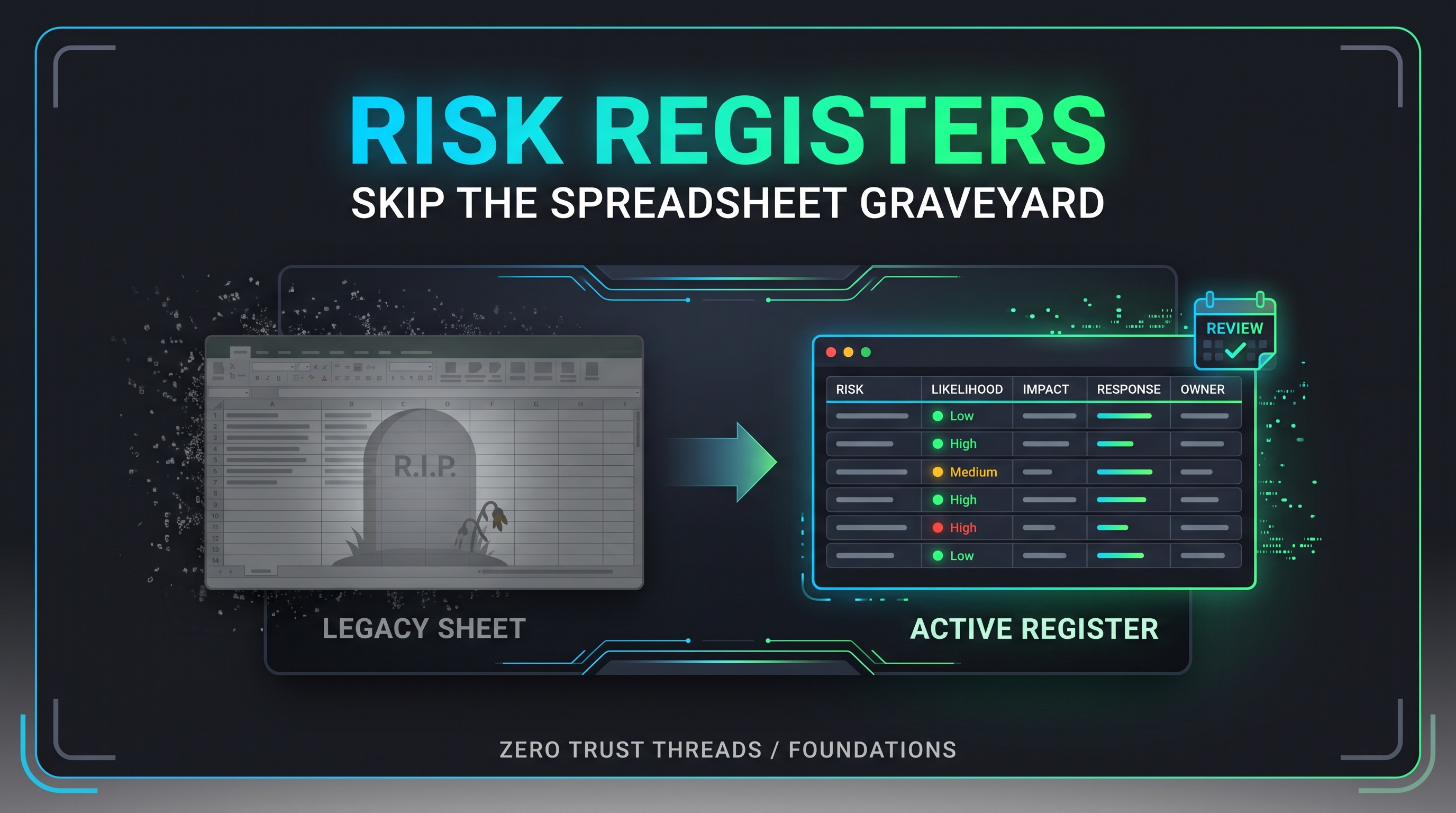
Someone says, "We should track that risk."
A spreadsheet appears. It gets 40 rows, a color scheme, and a dropdown menu. Three months later nobody has opened it.
That is a spreadsheet graveyard. A risk register is supposed to be the opposite: a small, living record that helps people make decisions.
What a Risk Register Is
A risk register is a structured list of identified risks and what is being done about each one.
NIST Internal Report (IR) 8286, which covers integrating cybersecurity with enterprise risk management, treats the risk register as a repository of risk information. The point is not the spreadsheet. The point is having one consistent place where risks are described, owned, and tracked.
Think of it as the memory of your risk decisions.
Without one, risk lives in people's heads, in old emails, and in hallway conversations. That works until someone leaves, forgets, or remembers it differently.
What Goes in a Risk Entry
You do not need dozens of columns. A beginner-friendly register can start with these:
| Field | What it answers |
|---|---|
| ID | How do we refer to this risk? |
| Description | What could go wrong, and to what? |
| Asset | What is affected? |
| Likelihood | How likely is it? |
| Impact | How bad would it be? |
| Existing controls | What is already reducing it? |
| Response | What are we doing about it? |
| Owner | Who is accountable? |
| Review date | When do we look again? |
NIST IR 8286 describes a more detailed set of fields, and organizations tailor them. Start small. A register people actually update beats a perfect one nobody opens.
Write the Risk as a Sentence, Not a Label
A weak entry looks like this:
Outdated software
That is a condition, not a risk. It does not say what could happen or why anyone should care.
A stronger entry looks like this:
An unsupported operating system on the file server could be exploited, leading to unauthorized access to shared files and a multi-day outage.
Now there is a cause, an event, an asset, and a consequence. That connects directly to Vulnerability, Threat, and Risk Are Not the Same Thing. The weakness is the unsupported system. The risk is the potential consequence, weighed by likelihood and impact.
Scoring Without Pretending to Be Precise
Most registers rate likelihood and impact on a simple scale such as low, moderate, and high. NIST Special Publication (SP) 800-30 Rev. 1, the guide for conducting risk assessments, describes qualitative scales like this.
A few honest cautions:
- A score is a structured opinion, not a measurement.
- Two people can rate the same risk differently, and that is a useful conversation.
- A "high" next to a risk is only meaningful if people agree what high means.
Write down what each level means for your environment. Otherwise the numbers look scientific while meaning very little.
The Response Column Is the Whole Point
A risk without a decision is just a worry written down.
Common responses are:
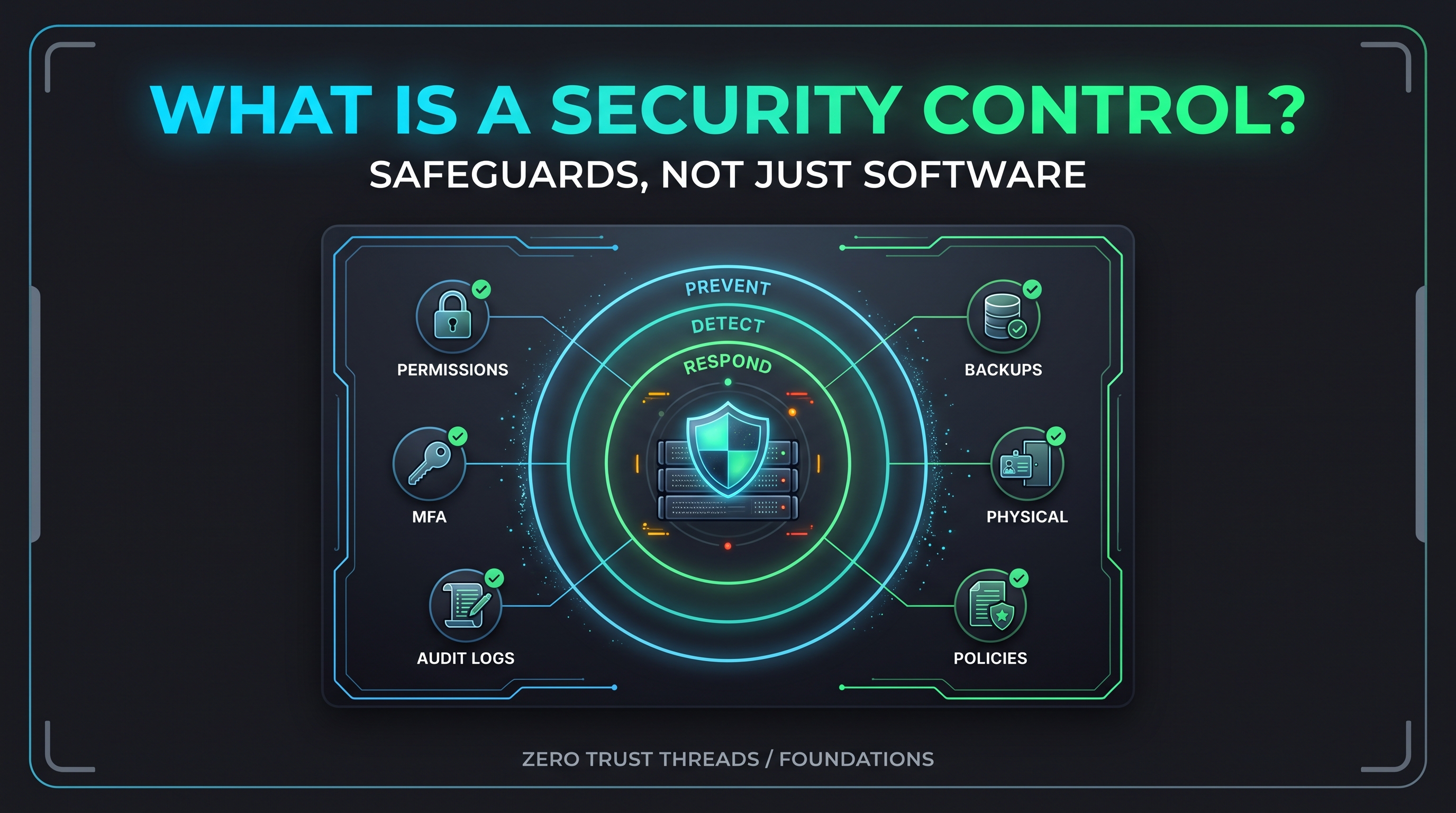
- Mitigate: add or improve controls to reduce the risk. (See What Is a Security Control?)
- Accept: knowingly live with it. (See Risk Accepted)
- Avoid: stop the activity that creates the risk.
- Transfer: shift some of the consequence elsewhere, such as through insurance or a contract.
Terminology varies slightly between frameworks, so use the labels your organization recognizes.
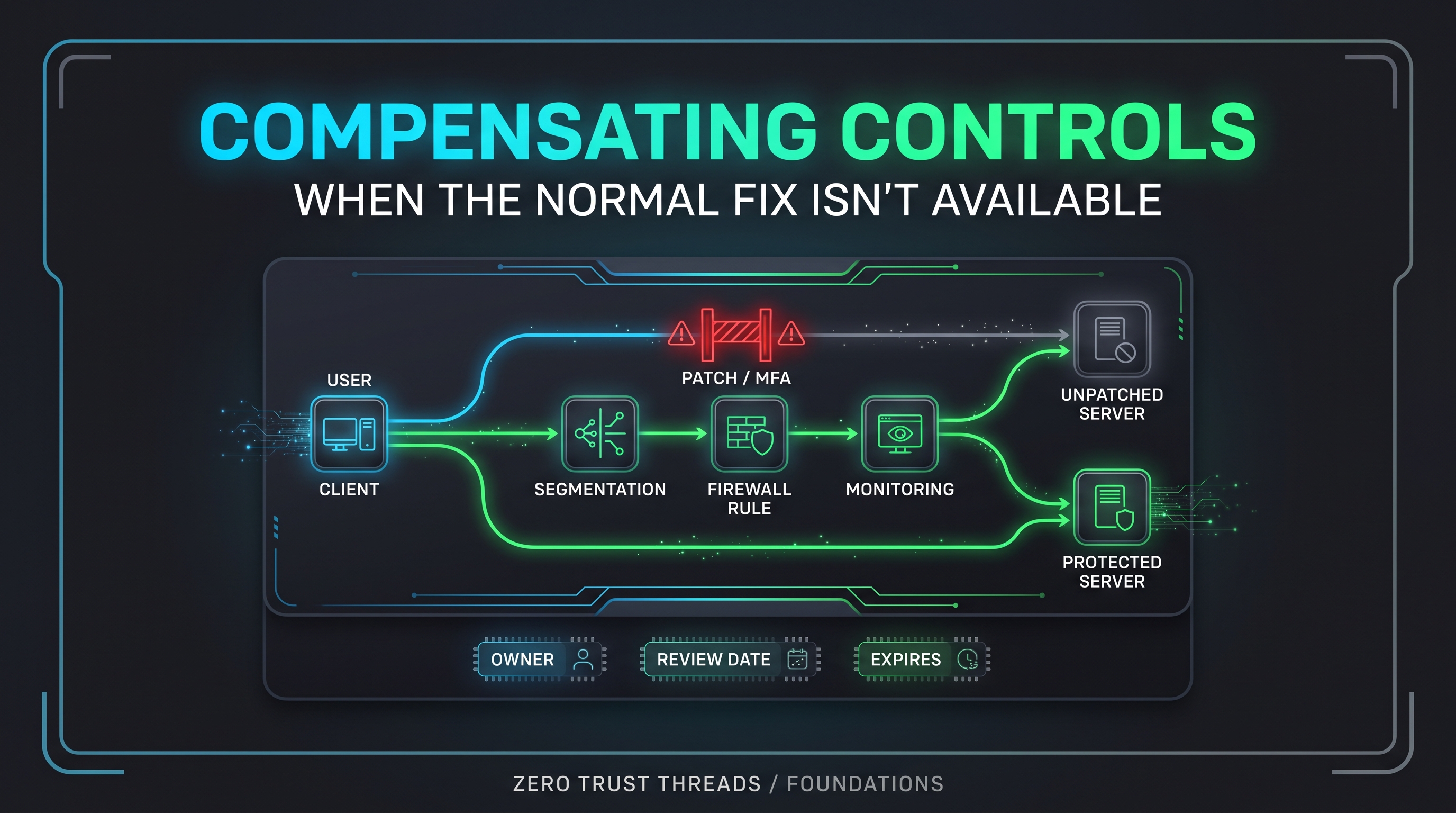
An accepted risk still belongs in the register. It needs an owner, a reason, and a date to revisit. This is also where exceptions live. A documented exception is an accepted risk with a name on it.
Common Misconceptions
"The register is the risk assessment."
The register records the results. The assessment is the thinking that produces them.
"Longer is better."
A register with 200 stale entries hides the five that matter. Keep it prioritized.
"Once a risk is rated, we are done."
Risks change when systems, threats, and controls change. SP 800-30 treats risk assessment as ongoing, not one-time. Review dates exist for a reason.
"Security owns all the risks."
Security can maintain the register, but the owner of a risk should be the person with authority over the thing at risk and the budget to address it.
"A low score means ignore it."
It means it is not the priority today. It should still be reviewed.
Practical Exercise: A Three-Risk Register for Your Lab
Use your home lab. Everything here is a paper exercise.
- Open a spreadsheet or a Markdown table.
- Add three risks about your own lab. For example:
- A VM that has not been updated in months
- Secure Shell (SSH) exposed with password login
- No backup of a VM you would hate to rebuild
- Write each as a full sentence with cause, event, and consequence.
- Rate likelihood and impact as low, moderate, or high. Write one line on what those words mean to you.
- Pick a response for each, name an owner (you), and set a review date.
Starter template:
| ID | Risk | Asset | Likelihood | Impact | Existing controls | Response | Owner | Review |
|----|------|-------|-----------|--------|-------------------|----------|-------|--------|
| R-001 | | | | | | | | |
Look at it again in a month. If you changed nothing, that is useful information about what your register is for.
Key Takeaway
A risk register is a living record of risks, decisions, owners, and review dates.
It earns its place when it helps someone make or revisit a decision. If it only collects rows, it is a graveyard.
Verified References
- NIST IR 8286, Integrating Cybersecurity and Enterprise Risk Management (ERM). https://csrc.nist.gov/news/2020/integrating-cybersecurity-and-enterprise-risk-mgmt
- NIST IR 8286A, Identifying and Estimating Cybersecurity Risk for Enterprise Risk Management. https://doi.org/10.6028/NIST.IR.8286A
- NIST IR 8286C, Staging Cybersecurity Risks for Enterprise Risk Management and Governance Oversight. https://www.nist.gov/node/1717006
- NIST SP 800-30 Rev. 1, Guide for Conducting Risk Assessments. https://www.nist.gov/node/562711
About the author
- Zero Trust Threads is a cybersecurity media and lifestyle brand focused on making cybersecurity, Linux, networking, GRC, and tech culture approachable through practical projects, real-world learning, and a little humor. Trust nothing. Learn everything.
Comments
Join the discussionNo comments yet. Be the first to comment.
Zero Trust Threads Foundations
Cybersecurity does not have to be learned all at once. Zero Trust Threads Foundations breaks down essential cybersecurity and IT concepts into approachable, practical lessons for beginners. Learn the fundamentals of HTTP security, home labs, Linux, logs, defensive security, and more while building the knowledge needed for hands-on learning.