Compensating Controls: When You Can't Fix It the Normal Way
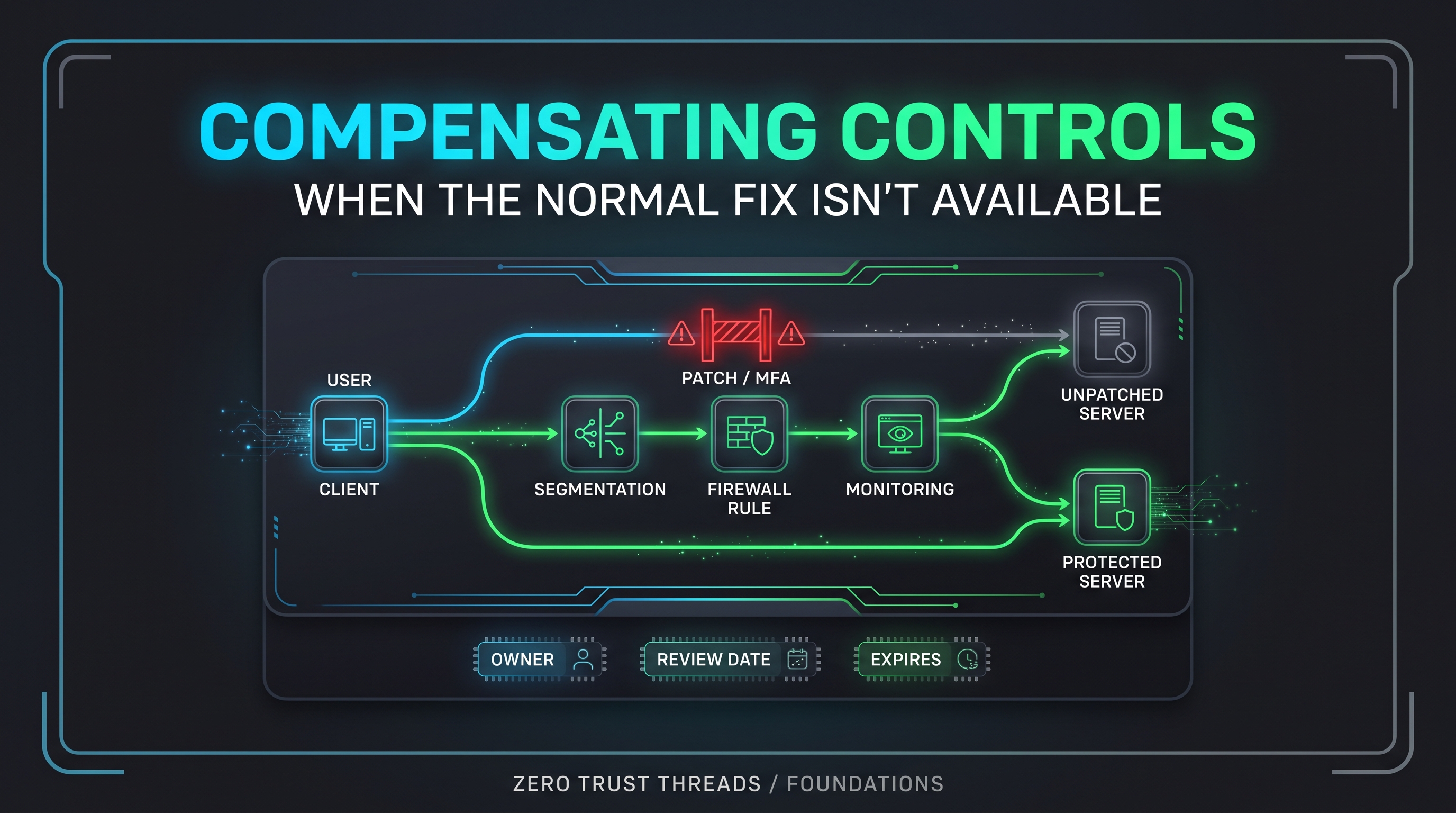
A requirement says every system must use multi-factor authentication (MFA).
Then someone points out that one older system cannot support it. It does not have the feature, and replacing it is a year away.
So what now? Ignore the requirement? Stop using the system? Often there is a third option: protect it a different way, and write that down.
What a Compensating Control Is
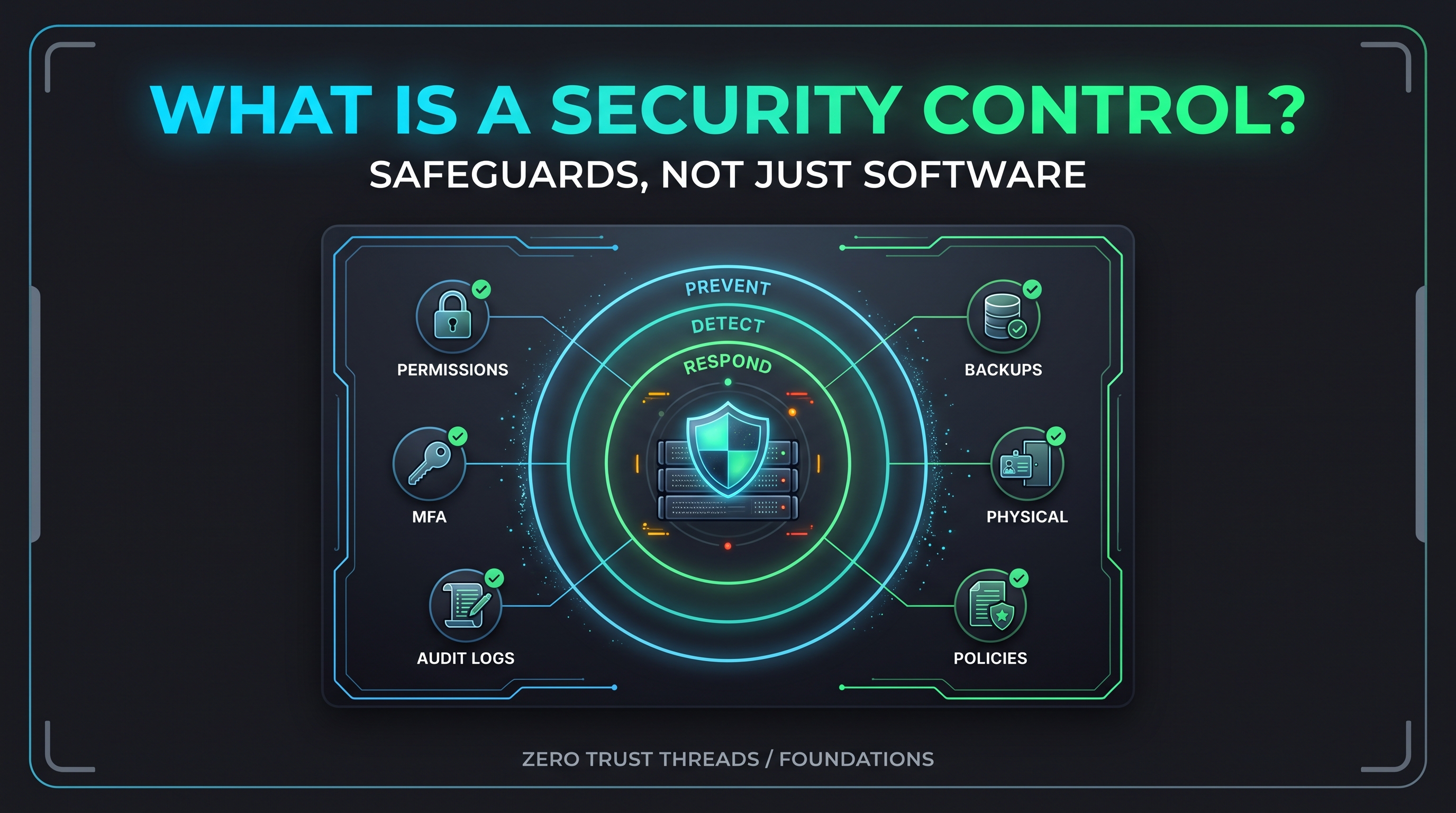
NIST defines compensating controls as controls implemented in place of the controls in a baseline that provide equivalent or comparable protection for a system or organization.
Plain version: when you cannot implement the expected control, you use a different one that reduces the same risk.
A baseline is the standard set of controls expected for a system, such as the ones in NIST Special Publication (SP) 800-53B. If a baseline control is not practical, a compensating control can stand in for it.
The key words are "equivalent or comparable." A compensating control is a substitute that does the same job, not an excuse.
A Simple Example
Say the requirement is to apply security updates promptly. One legacy system cannot be patched because the application running on it breaks.
Alternative protections might include:
- Network segmentation so only a few systems can reach it
- Tighter firewall rules around its ports
- Extra logging and monitoring on that system
- Restricting who can log in
None of these fix the underlying weakness. They reduce the chance or consequence of someone reaching and abusing it.
This is a good moment to remember Patch Tuesday: How to Prioritize Vulnerabilities Instead of Patching Everything. Exposure and context matter as much as the patch itself.
What Makes a Compensating Control Legitimate
A control becomes compensating when it is deliberate and documented. Strong entries usually answer these questions:
| Question | Why it matters |
|---|---|
| What requirement can't we meet? | Names the gap precisely |
| Why can't we meet it? | Shows a real constraint, not convenience |
| What are we doing instead? | Describes the alternative |
| Why is it comparable? | Explains how it addresses the same risk |
| Who owns it? | Gives someone accountability |
| When does it expire or get reviewed? | Prevents a forever workaround |
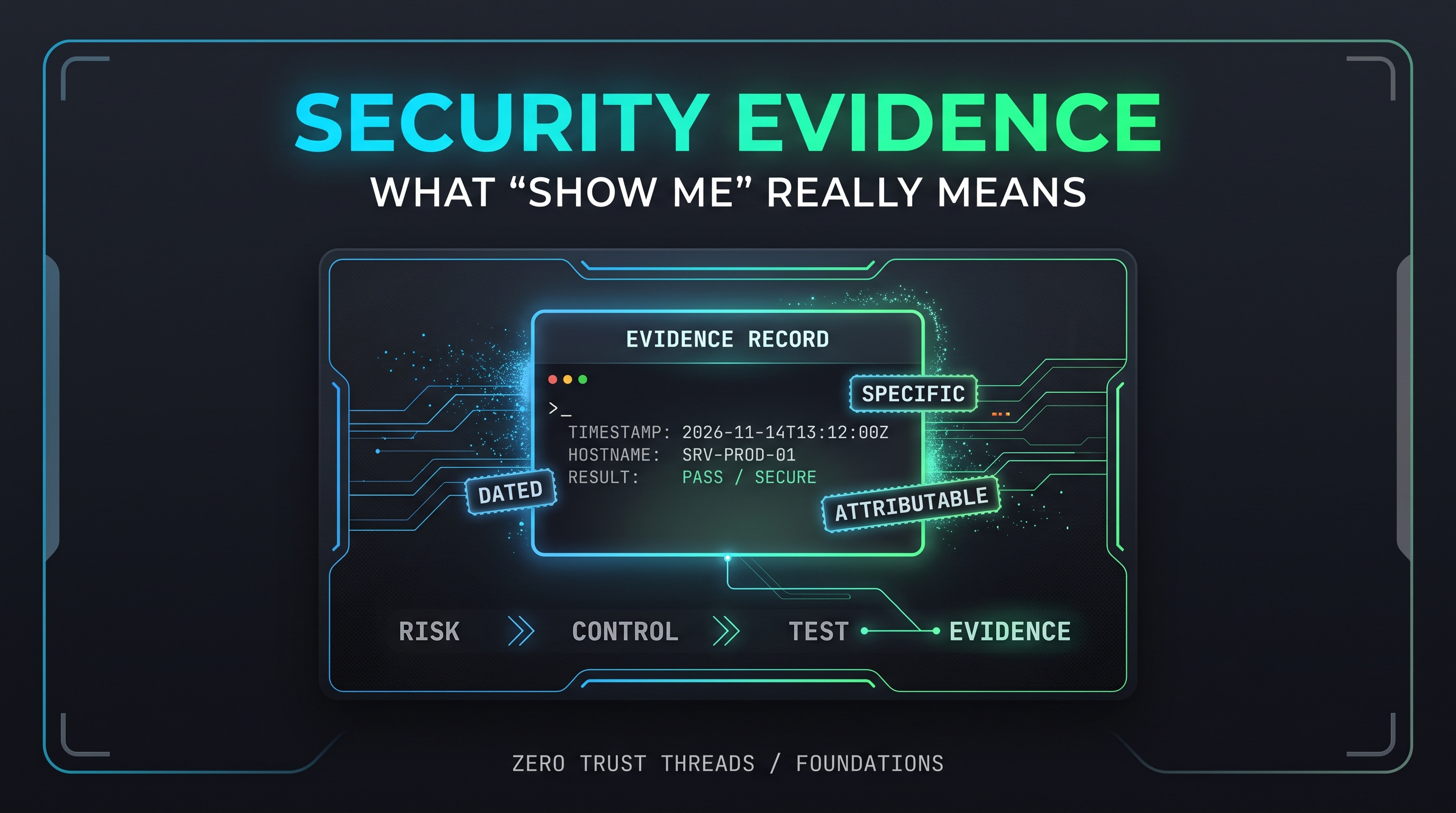
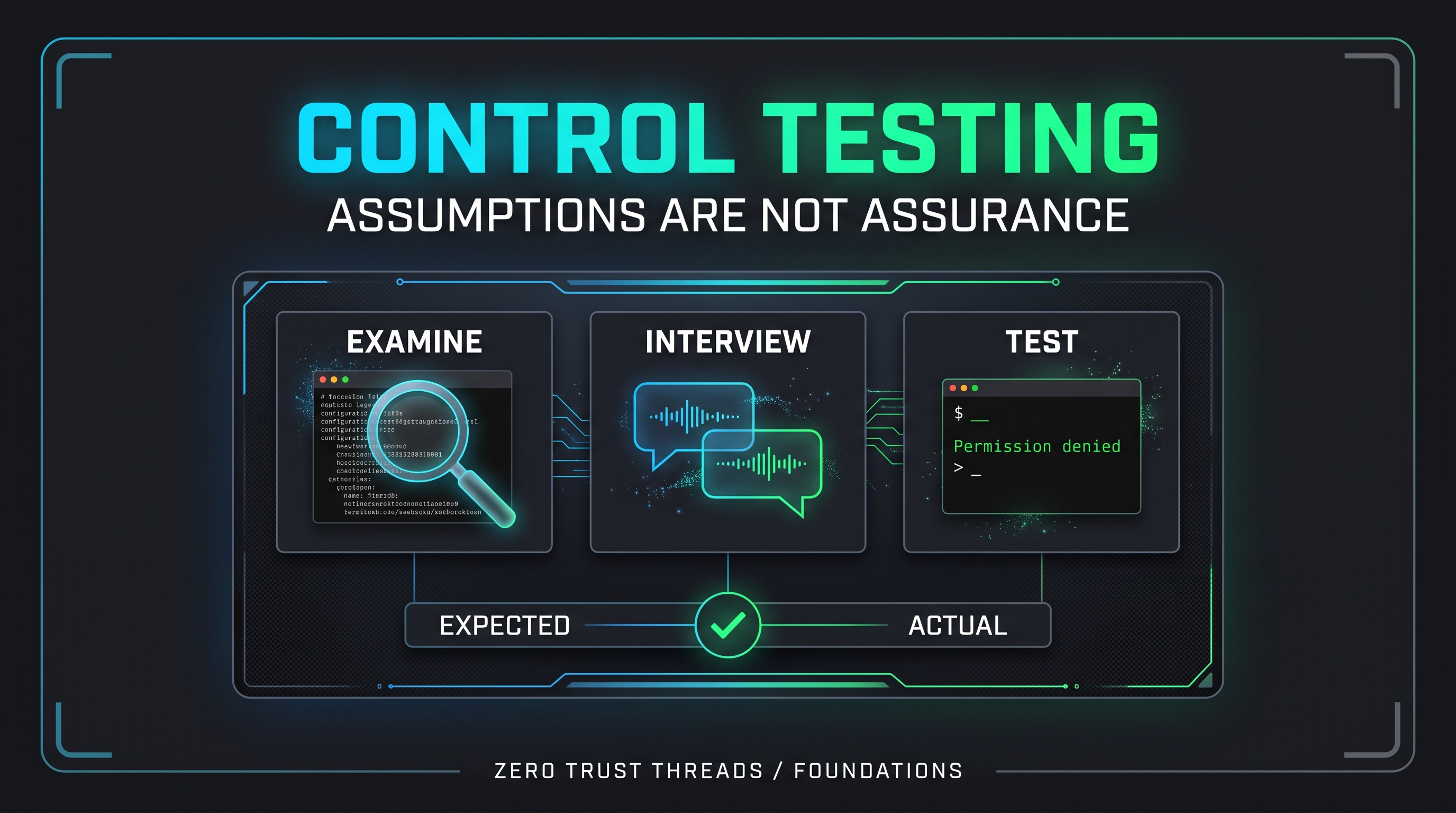
| How do we know it works? | Connects to control testing |
That last row matters. A compensating control that nobody checks is an assumption.
The Temporary Access Problem Applies Here Too
In Temporary Access Has a Way of Becoming Permanent, the pattern was purpose, owner, scope, expiration, and review.
Compensating controls follow the same life cycle. They are often created during a tough moment, with the intention to fix things properly later. Without an expiration and a review, "later" never arrives, and you build security debt. See Security Debt Compounds Too.
A good compensating control record says what must happen for it to retire. For example: "Remove when the legacy system is replaced."
Common Misconceptions
"It is the same as ignoring the requirement."
No. Ignoring leaves the risk untreated. A compensating control treats the same risk another way.
"Any extra control counts."
It has to address the same risk. Adding a security camera does not compensate for missing MFA.
"It fixes the vulnerability."
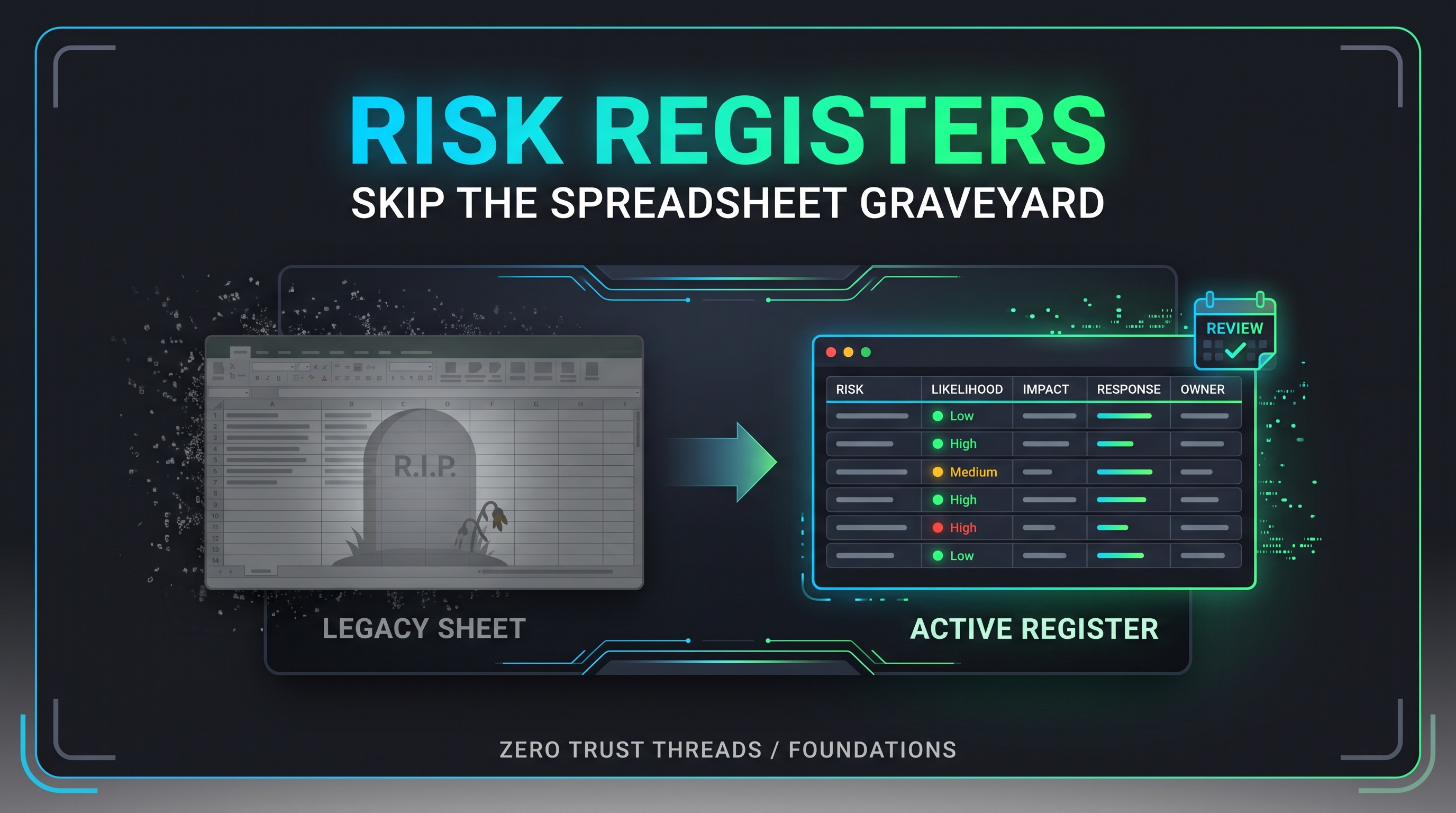
Usually it does not. It reduces exposure or consequence while the underlying weakness remains. That remaining weakness may still need to be tracked in your risk register.
"Once approved, it is permanent."
Systems and threats change. Review it.
"Compensating controls and risk acceptance are the same thing."
They are related but different. A compensating control reduces risk. Risk acceptance is a decision to live with what remains. Often you do both: add a compensating control, then accept the residual risk. See Risk Accepted.
Practical Exercise: Write a Compensating Control Record
This is a documentation exercise using a made-up scenario in your own lab.
Scenario: you run a small test VM with an old service you cannot update because a lab tool depends on it.
Fill in this template:
**Requirement not met:** Keep software on current supported versions.
**Why not met:** Lab tool breaks on newer versions.
**Compensating controls:**
- Service reachable only from my admin VM
- Firewall rule limiting access to one port
- Logs reviewed weekly
**Why comparable:** Reduces who can reach the service and improves detection.
**Owner:** (you)
**Review date:** (30 to 90 days)
**Retire when:** The lab tool is replaced.
**Residual risk:** Weakness still exists; tracked as R-00X.
Then ask: could someone else read this and understand exactly what is protecting the system and when it ends?
Key Takeaway
A compensating control is a documented alternative that provides comparable protection when the expected control cannot be used.
It is only credible when it has an owner, a reason, a way to verify it works, and a date to revisit.
Verified References
- NIST Computer Security Resource Center, Glossary: Compensating Controls. https://csrc.nist.gov/glossary/term/compensating_controls
- NIST Computer Security Resource Center, Glossary: Compensating Security Control. https://csrc.nist.gov/glossary/term/compensating_security_control
- NIST SP 800-53B, Control Baselines for Information Systems and Organizations. https://csrc.nist.gov/pubs/sp/800/53/b/upd1/final
- NIST SP 800-53 Rev. 5 (current release 5.2.0). https://csrc.nist.gov/publications/detail/sp/800-53/rev-5/final
About the author
- Zero Trust Threads is a cybersecurity media and lifestyle brand focused on making cybersecurity, Linux, networking, GRC, and tech culture approachable through practical projects, real-world learning, and a little humor. Trust nothing. Learn everything.
Comments
Join the discussionNo comments yet. Be the first to comment.
Zero Trust Threads Foundations
Cybersecurity does not have to be learned all at once. Zero Trust Threads Foundations breaks down essential cybersecurity and IT concepts into approachable, practical lessons for beginners. Learn the fundamentals of HTTP security, home labs, Linux, logs, defensive security, and more while building the knowledge needed for hands-on learning.